Q&A 02
Japanese Phrases You'll Actually Use
You can get through Japan with very little Japanese. These eight phrases cover most of the moments where a few words change how the day goes.
Everyday Essentials
What does “Sumimasen” mean, and when should I use it?
“Sumimasen” is excuse me, sorry, and a light thank you, all in one word. You'll hear it when someone squeezes past on a train, calls a waiter, or receives a small favor.
Many travelers find it covers most situations where you need to get someone's attention politely. Said with a small bow of the head, it rarely comes out wrong.
- Japanese
- すみません
- Romaji
- Sumimasen
- English
- Excuse me / Sorry / Thanks
- When
- Getting attention, apologizing, squeezing past someone, calling staff
How do I say “Thank you” politely in Japanese?
“Arigato gozaimasu” is the safe, polite version that works with anyone. In shops and restaurants, staff may say it to you first; replying with the same phrase or a nod is normal.
After something is finished, such as a meal or a tour, you may hear “arigato gozaimashita”, the past form. Both are fine from a visitor.
- Japanese
- ありがとうございます
- Romaji
- Arigatō gozaimasu
- English
- Thank you (polite)
- When
- Shops, restaurants, strangers, anyone older or in a service role
What's the difference between “Arigato” and “Arigato gozaimasu”?
“Arigato” on its own is casual, the kind of thing you'd say to a friend or a child. “Arigato gozaimasu” adds politeness and is what most people use with strangers and staff.
Neither is wrong, but if you only remember one, the longer version keeps you on the safe side in nearly every situation. Some travelers shorten it to “domo”, which is friendly but quite casual.
- Japanese
- ありがとう/ありがとうございます
- Romaji
- Arigatō / Arigatō gozaimasu
- English
- Thanks (casual) / Thank you (polite)
- When
- Casual with friends; polite everywhere else
How do I ask “Where is the restroom?” in Japanese?
“Toire wa doko desu ka?” is understood everywhere. Public restrooms are common in stations, department stores, and convenience stores, and many are free.
Signs often use pictograms or the English word, so pointing at a map or simply saying “toire?” with a questioning look also works. “Otearai” is a slightly softer word you may hear from staff.
- Japanese
- トイレはどこですか?
- Romaji
- Toire wa doko desu ka?
- English
- Where is the restroom?
- When
- Stations, shops, restaurants, anywhere
Getting Around and Eating Out
How do I ask “How much is this?”
“Kore wa ikura desu ka?” while pointing at the item does the job. Most shops show prices clearly, and cashiers usually turn the register display toward you, so you rarely need to understand the number spoken aloud.
At markets and small stalls, the phrase comes in handy. Many sellers will type the price on a calculator or show it on their fingers.
- Japanese
- これはいくらですか?
- Romaji
- Kore wa ikura desu ka?
- English
- How much is this?
- When
- Markets, souvenir shops, stalls without price tags
What should I say when ordering food?
Point at the menu and say “kore o kudasai”, meaning “this one, please”. Adding “onegaishimasu” at the end makes it a touch more polite. Many menus have photos, and some restaurants use tablets or ticket machines, so talking is optional.
To call staff over in a place without a table button, a raised hand and “sumimasen” is the normal signal.
- Japanese
- これをください
- Romaji
- Kore o kudasai
- English
- This one, please
- When
- Ordering at restaurants, cafés, and food stalls
How do I say “I don't understand Japanese”?
“Nihongo ga wakarimasen” tells people you don't understand Japanese. It usually leads to slower speech, gestures, or someone finding an English menu or a translation app.
You might add “eigo wa daijobu desu ka?” to ask if English is okay. Many people understand more English than they speak, so simple words and patience go a long way.
- Japanese
- 日本語がわかりません
- Romaji
- Nihongo ga wakarimasen
- English
- I don't understand Japanese
- When
- When a conversation gets ahead of you
How do I ask someone to repeat something slowly?
“Mō ichido, yukkuri onegaishimasu” means “once more, slowly, please”. Most people are happy to repeat themselves, and many will switch to simpler words or write things down.
If numbers are the problem, asking “kaite kudasai” (please write it) often solves it. Station staff in particular are used to this.
- Japanese
- もう一度、ゆっくりお願いします
- Romaji
- Mō ichido, yukkuri onegaishimasu
- English
- Once more, slowly, please
- When
- Directions, prices, announcements you missed
Watch the Short
Hear the phrases said out loud in the Shorts.
Sumimasen Doesn't Just Mean Sorry: 3 Uses in Japan
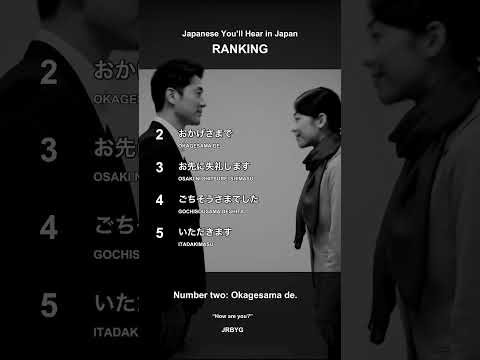
5 Japanese Phrases You'll Hear in Japan / Part 1
5 Japanese Phrases You'll Hear at a Convenience Store